LAS VEGAS · LASER & REJUVENATION CENTER

Hair shedding after laser hair removal often becomes noticeable about 5 to 14 days after treatment and can continue into the third week. Seeing stubble right after your appointment is common because the treated hairs take time to work their way out.
You might spot a few loose hairs in the shower or realize that a patch of skin feels smoother as you’re getting dressed. Both can be signs of shedding. In its guide to laser hair removal, Mayo Clinic describes shedding as a gradual process that takes days to weeks.
How long does it take for hair to fall out after laser hair removal? The first few days can look much like an ordinary stretch between shaves. The difference often becomes clearer in the second week, as treated hairs begin to release.
The stages can overlap. Even in the same area, some hairs will come away during a shower while others stay put for another few days. Leeds Teaching Hospitals’ aftercare guidance advises letting treated hairs fall out naturally. Between appointments, follow your provider’s instructions about when you can shave, and skip tweezing, waxing, and sugaring.
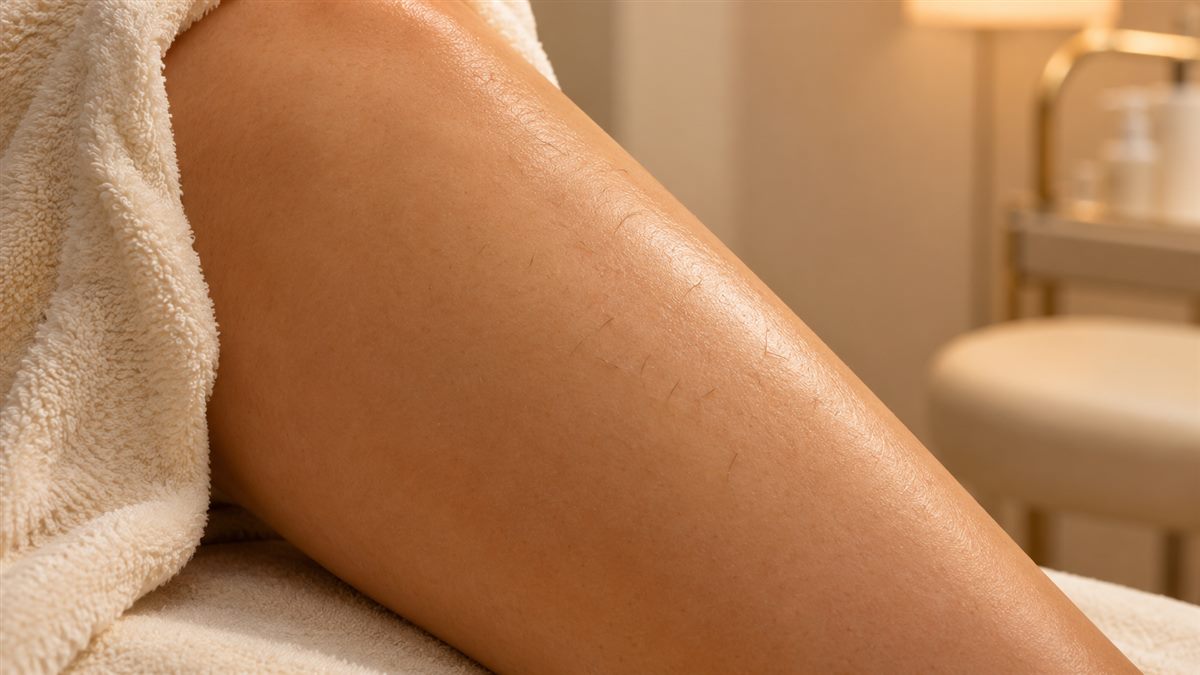
About a week after treatment, you might run a hand over your shin and feel rough stubble again. Up close, you may see tiny dark dots, sometimes called pepper spots. It’s easy to wonder if the hair is already coming back thicker. A treated hair shaft can become more visible as it works its way out of the follicle, which is why shedding can look like continued growth.
If you’re keeping track, pick one small patch and compare how it feels a week apart. You may notice that it feels smoother before you ever see a loose hair. Avoid tugging on the stubble to see whether it’s ready to come out.
Think of two hairs growing side by side. One may be in anagen, actively growing and at its most responsive to the laser. Pigment in the hair absorbs the laser’s energy, which heats the follicle. Its neighbor may already be in catagen, a short transition when growth stops and the follicle begins to shrink. Other follicles are in telogen, a resting phase before the next growth cycle begins.
That difference helps explain why you can see a smooth patch right next to an area that still has visible hair. The proportion of actively growing hairs also varies by body area. Spacing appointments gives more follicles time to enter the growth phase when they’re most responsive to treatment.
A lot of shedding goes unnoticed. Fine or short hairs can rinse away in the shower, and some people see a change closer to week three. One area may also respond differently from another because hair thickness, color, and treatment settings all matter. Very light hair, for example, contains less pigment for the laser to target.
If you reach week three and the area still looks and feels the same, especially if growth seems just as fast or dense as before, contact your provider before your next visit. Tell them which area was treated and what you’ve noticed since the appointment. That gives them a starting point to review your response and decide whether the treatment plan needs an adjustment.
Not necessarily. Fine or short hairs can wash away in the shower without you noticing, so the first change you see might be a patch that takes longer to fill in. If the area looks the same and the hair seems to be growing as quickly as before by around week three, check in with your provider before your next visit.
You can usually shave once the skin feels back to normal and your provider says it’s okay. If the area is still sore or swollen, give it more time. Shaving trims the hair at the surface. Patient aftercare guidance advises against removing hairs from the root between sessions.
There’s no need to hurry shedding along. If your provider recommends gentle exfoliation once the redness and tenderness have settled, it may help free hairs that are already coming loose. Leave abrasive scrubs and vigorous rubbing out of the routine while the area settles.
If you’re considering laser hair removal in Las Vegas, our team at Safi Miran can evaluate your skin and hair type and explain what to expect between sessions.



Safi Miran © 2026. All Rights Reserved